

Short answer: lip blushing does not hurt the way most people brace for. With topical numbing working, the majority of clients put it somewhere in the 2-to-4 range on a 10-point scale — a warm, buzzy, slightly scratchy pressure rather than sharp pain. The most common reaction we see halfway through the first pass is relief. People walk in expecting a tattoo needle on bare lips and find something much closer to a firm, vibrating pressure.
The honest caveat: the first minute or two, before the numbing has fully taken hold, is the least comfortable part of the entire appointment. Lips are vascular and full of nerve endings, so that opening pass registers. Once the secondary numbing goes on — the stronger kind that can only be applied after the skin is opened — most people settle in completely. They scroll their phone, they talk, they zone out. A fair number fall asleep. That’s the real experience, and it’s why lip blushing has a reputation for being far more tolerable than people assume.
What lip blushing actually feels like, start to finish
Before anything starts: about 20 minutes of numbing
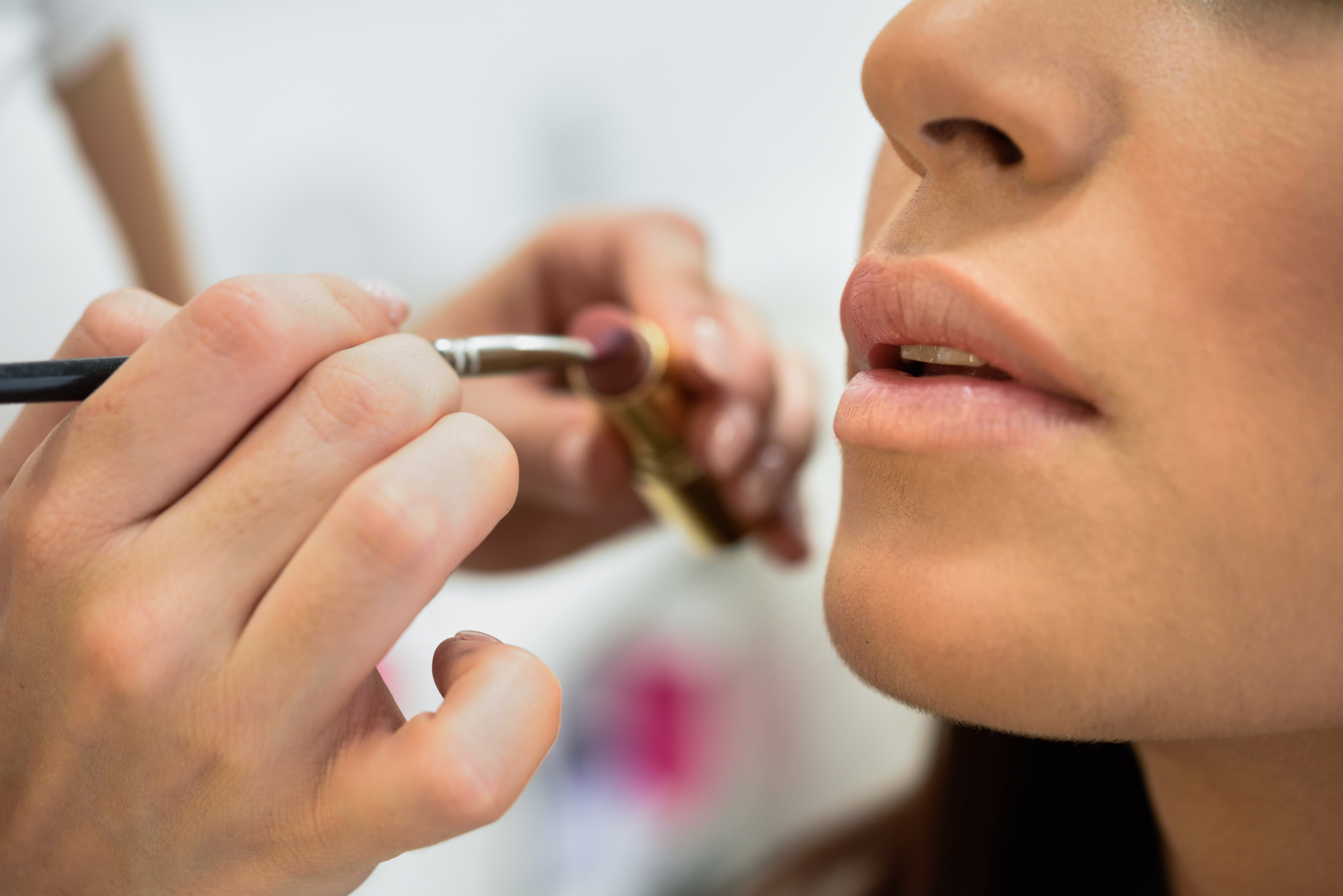
Nothing touches your lips with a needle until a topical anesthetic has been sitting on them for roughly 20 minutes. During that wait your lips go heavy and thick — the feeling people compare to a dental appointment, minus the injection. Some clients say their lips feel like they belong to someone else. That’s the point. We map and outline your shape while the numbing does its job, so by the time we begin, you’ve already talked through exactly where the color is going.
The first pass: the part you’ll actually notice
Topical numbing sits on the surface. The first pass is what allows the stronger, second-stage numbing to reach the layers underneath. So for roughly 60 to 120 seconds, you’ll feel a scratchy vibration, like a cat’s tongue with a buzz behind it. It’s not nothing. It is also over quickly, and it’s the hardest moment of the appointment. Breathe normally through it — people who hold their breath tense their whole face, which makes everything feel sharper than it is.
The middle: the easy stretch
After the second numbing is applied and given a few minutes, sensation drops off dramatically. Most of the session is spent here. You’ll feel pressure and movement, and you’ll hear the machine, but the sharpness is gone. This is the hour where clients from Smithtown and Northport who drove in convinced they were going to white-knuckle the whole thing end up chatting about their kids or dozing off.
The corners and the border
Two spots stay more sensitive than the rest: the outer corners of the mouth and the vermilion border, that crisp line where lip meets skin. Numbing doesn’t hold as well there. We work those areas in short bursts and re-numb as needed rather than pushing through. If something feels sharp, say so — there is no medal for silence, and we can almost always fix it in 60 seconds.
How it compares to brow work
If you’ve had microblading or ombre powder brows done, you have a useful reference point. Brows are generally the more comfortable of the two — thicker skin, fewer nerve endings, less blood flow. Lips are more sensitive but the session is often shorter and more evenly numb once we’re past the first pass. Clients who’ve done both usually describe brows as boring and lips as intense-then-boring.
BOOK YOUR LIP BLUSH CONSULT
or call (631) 458-7025
What makes it hurt more — and what makes it hurt less
Two people can have identical procedures and rate them three points apart. Most of that gap comes down to things you control in the 48 hours beforehand.
- Your cycle. Sensitivity spikes in the days right before and during your period. If your schedule allows it, book for the week after instead. This is the single biggest variable we see.
- Caffeine. Skip it the morning of. Caffeine thins blood slightly, increases bleeding, and makes you jumpy — all three work against you.
- Alcohol. None the night before. Same reason, plus dehydrated lips take pigment poorly.
- Blood thinners and fish oil. More bleeding means more pigment gets pushed out, which means more passes, which means more sensation. Check with your doctor before pausing anything prescribed.
- Cold sore history. If you’ve ever had one, ask your doctor about an antiviral starting a few days before. The procedure can trigger an outbreak, and an active cold sore is genuinely uncomfortable in a way the appointment itself is not.
- Dry, chapped lips. Gently exfoliate and moisturize for a week beforehand. Healthy lips numb better and heal cleaner.
- Sleep and food. Show up rested and having eaten. An empty stomach plus nerves is how people get lightheaded — and that, not the needle, is the thing that actually ruins appointments.
What about afterward? The 24-hour question
This is the part nobody asks about and everybody should. The appointment itself is the easy half. Immediately after, your lips will be swollen — noticeably, for about 24 to 48 hours. Color looks alarmingly bright. There’s a tight, sunburned, chapped sensation for the first day or two that responds well to the ointment we send you home with.
Actual pain afterward is rare. Tightness and dryness are normal; throbbing is not. By day three or four you’ll flake, and the flaking phase tests your willpower more than your pain tolerance — do not pick. Color softens by 40 to 50 percent as it heals, and by week four you’re looking at your real result. Full details on healing and touch-ups live on our lip blushing service page, and healed work from our studio is in the gallery.
Searching “lip blushing near me” on Long Island? Ask these questions
Comfort is a skill, not luck. When you’re comparing artists, ask what numbing protocol they use and whether they re-numb mid-session, how long the appointment is booked for, whether they’re licensed and bloodborne-pathogen certified, and whether a perfecting session is included. An artist who rushes a single-pass session with one round of topical is where the horror stories come from.
We’re on New York Avenue in Huntington Village, and clients drive in from Northport, Commack, Dix Hills, Melville and Syosset — usually because they’d rather sit with someone who does this every day than take a chance closer to home. Parking is easy, and consultations are unrushed. For reference, lip blushing across Long Island typically runs in the mid-hundreds depending on the artist’s experience and whether a touch-up session is included; that’s a general market range, not a quote. For exact pricing, call (631) 458-7025 or book online.
Not sure lips are where you want to start? Plenty of clients warm up with a keratin lash lift or brow lamination first — both are completely painless and a low-stakes way to meet us. Questions before you commit? Reach out through our contact page and we’ll answer honestly.
BOOK YOUR LIP BLUSHING APPOINTMENT
or call (631) 458-7025
Lip blushing pain: quick answers
Does lip blushing hurt more than a regular tattoo?
No, and it’s not close. Body tattoos are done without numbing and go deeper into the skin. Lip blushing is a shallow, cosmetic-depth implantation done under layered topical anesthetic. Clients with body tattoos consistently rate lip blushing as far easier.
Can I take something for the pain beforehand?
Skip aspirin, ibuprofen and other blood thinners — they increase bleeding, which makes the session longer and the result patchier. Tylenol is generally fine if you want something, and acetaminophen afterward handles any residual tenderness. Check with your doctor about anything you take regularly.
How long does the appointment take?
Plan on two to two and a half hours door to door, including numbing time, shape and color mapping, and aftercare instructions. The actual pigment work is a smaller slice than people expect. Rushing this is exactly how bad results happen, so we don’t.
Will the touch-up session hurt as much?
Almost always less. The perfecting session six to eight weeks later is shorter, requires fewer passes, and you already know what to expect — and knowing what’s coming removes a surprising amount of the discomfort. Most clients describe the touch-up as easy.