

A lip blushing color chart is a lineup of pigment shades grouped by undertone — usually four families: nude and neutral pinks, warm corals and peaches, mauves and berries, and richer terracotta tones. Artists use it as a starting point, not a menu. The shade you point to on a chart is never exactly the shade you’ll heal with, because lip blush pigment doesn’t sit on top of your lips the way lipstick does — it blends with the natural lip color underneath it.
Picking your shade really comes down to three things: your skin’s undertone (cool, warm, or neutral), your natural lip tone, and how soft you want the healed result to be. At our studio in Huntington Village, we custom-mix every color during your consultation instead of matching you to a swatch on a card. Here’s how that decision actually gets made, so you can walk in already knowing what to expect.
The Four Lip Blushing Shade Families
Nearly every lip blushing color chart breaks down into the same four groups. Where you land depends less on what’s trending and more on what’s already going on with your lips and skin.
Nude and Neutral Pinks
The “my lips, but better” family — soft rose, dusty pink, warm nude. This is our most requested range by a mile, and it’s the safest choice if your natural lip tone is fairly even and you just want it defined and awake. It heals to something people can’t quite put their finger on: you look rested, not made up.
Warm Corals and Peaches
Brightening shades that add life to lips that read a little flat. Corals and peaches flatter warm and olive undertones beautifully, and they photograph like you’re lit from within. If your go-to lipstick leans peachy-pink, this is probably your lane.
Mauves and Berries
More depth, more definition. Mauve and berry pigments lean cool, and they heal to a soft plum-rose that gives real shape to the lip line. If you own six berry lipsticks and zero corals, your undertone has already voted.
Terracotta, Brick, and Deeper Tones
Richer, warmer shades built for deeper skin tones and for lips that carry more natural pigment. These are also the workhorses of dark lip neutralization — more on that below — where warm tones are layered in to balance blue or purple undertones before a target color goes on top.
Your Natural Lip Color Does Half the Work
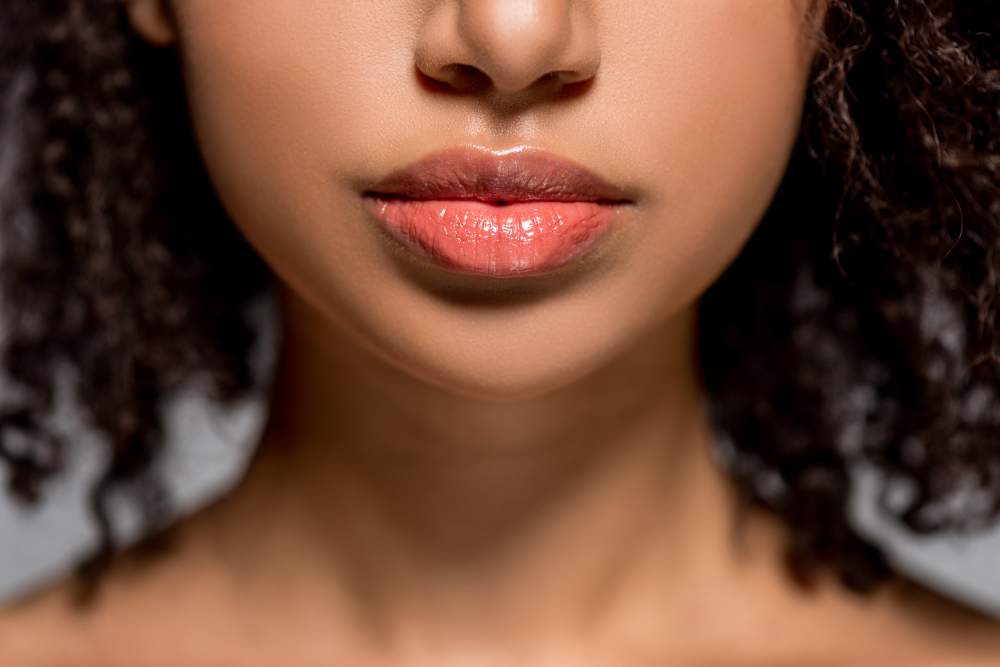
Here’s the part most color charts leave out: the same pigment heals differently on every single person. Lip blush is semi-sheer by design, so your natural lip tone shows through the finished result — it’s the canvas the color is painted on. Two clients can pick the identical shade and heal into two noticeably different colors, and both can be gorgeous.
Clients from Smithtown ask this all the time: can you do the exact color in this photo? We can get close — but the honest answer is that we’re mixing a formula for your lips that creates that effect, not copying a screenshot. Cooler lips with blue or purple undertones, for example, need a warm-based pigment mixed in, or the healed result can pull ashy. That correction step is invisible in the final color, but it’s the difference between a shade that glows and one that goes muddy.
BOOK YOUR LIP BLUSH CONSULT
or call (631) 458-7025
How We Pick Your Shade at Our Huntington Village Studio
Every lip blushing appointment here starts with a consultation, and shade selection is most of it. We look at your undertone in natural light, check how even your natural lip pigment is, and talk through the colors you actually wear day to day — not just the ones you screenshot. Then we mix a custom formula and hold it against your lips before any needle comes near you, so you’re approving a real color on your real skin, not a printed chart under studio lighting.
One tip that makes this easier: bring your favorite everyday lipstick. The shade you instinctively reach for tells us more about your undertone than any quiz, because it’s a color you’ve already road-tested against your face a hundred times. We’ll use it as a compass, then build a formula designed to heal into that feeling.
If you’ve been searching “lip blushing near me” from Huntington, Northport, or Commack, you can see healed results on real clients in our gallery — it’s the best way to spot which shade family you keep gravitating toward. And since you’re already planning a visit: plenty of clients pair lip blush with ombre powder brows so the whole face gets that same soft, finished look.
Day One vs. Healed: How the Color Settles
Whatever shade we mix will look bold for the first two or three days — expect it to read 30 to 50 percent darker and brighter than the final result. Then the lips flake lightly, and around week one or two you hit what artists call the ghost phase, where the color looks almost too soft. Don’t panic. The pigment is settling under a fresh layer of skin, and your true healed color surfaces between weeks four and six. A perfecting session around weeks six to eight is where we fine-tune anything — a touch more warmth, a little more depth at the border — once we can see exactly how your lips took the color.
What Lip Blushing Costs on Long Island
Shade consultation and custom mixing are typically bundled into the session itself — you shouldn’t be paying extra just to get the color right. Across Long Island, lip blushing generally runs somewhere in the range of $500 to $900 depending on the artist’s experience and whether the perfecting session is included, and complex color-correction work can sit above that. Every set of lips is different, so call (631) 458-7025 or book online for exact pricing.
Have a question that doesn’t fit neatly in a phone call — a photo of your lips, a shade you’re unsure about? Send it through our contact page and we’ll take a look before you ever book.
Lip Blushing Color Questions We Hear All the Time
How do I know which lip blushing color is right for me?
Start with your lipstick drawer — the shades you reach for daily are the strongest clue to your undertone. Beyond that, this is exactly what the consultation is for: we assess your undertone and natural lip pigment in person and mix a shade that’s yours alone, so you don’t have to get it right on your own.
Can lip blushing fix dark or uneven lips?
Yes — it’s called dark lip neutralization, and it uses warm-based pigments to balance blue or purple undertones, sometimes over more than one session. It’s also excellent for evening out patchy pigment or a faded lip border. It starts with a consult so we can map a realistic plan for your lips specifically.
How long do lip blushing colors last?
Most clients get two to four years before the color has softened enough to want a refresh. It fades gradually and evenly rather than disappearing one day, and sun exposure, exfoliating skincare acids, and smoking all speed that timeline up. A single color-boost session brings it back.
Should I bring a lipstick or inspiration photos to my appointment?
Please do — both. Your favorite everyday lipstick tells us your true undertone, and photos tell us the finish and depth you’re drawn to. We translate them into a custom mix for your lips rather than copying them shade-for-shade, which is how you get a result that looks born-with, not applied. You can read the full rundown of the appointment itself — numbing, session length, aftercare — on our lip blushing page.